How to Choose Neck Labels for Modern Apparel Brands
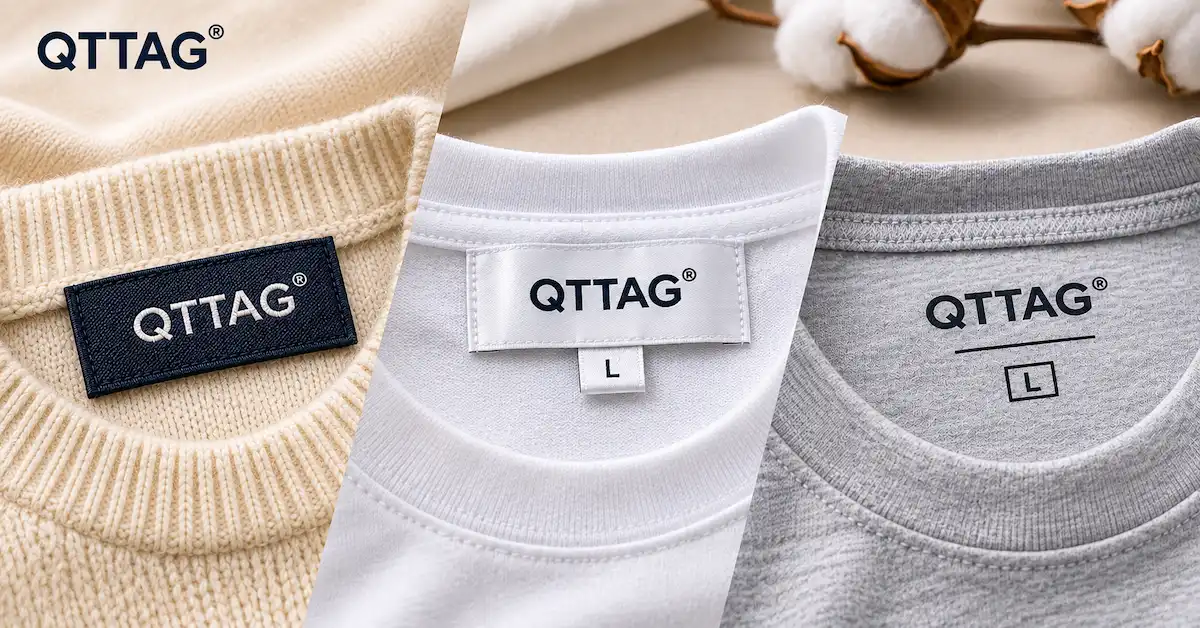
A neck label is one of the first branding details a customer notices when picking up a garment. It may be a woven label stitched beneath the collar, a printed fabric label or a small logo applied directly to the fabric.
The label looks simple, but choosing the wrong construction can create problems. A stiff label may feel uncomfortable against the skin. Small lettering can become unclear when woven. A heat transfer that works on cotton may behave differently on stretch sportswear.
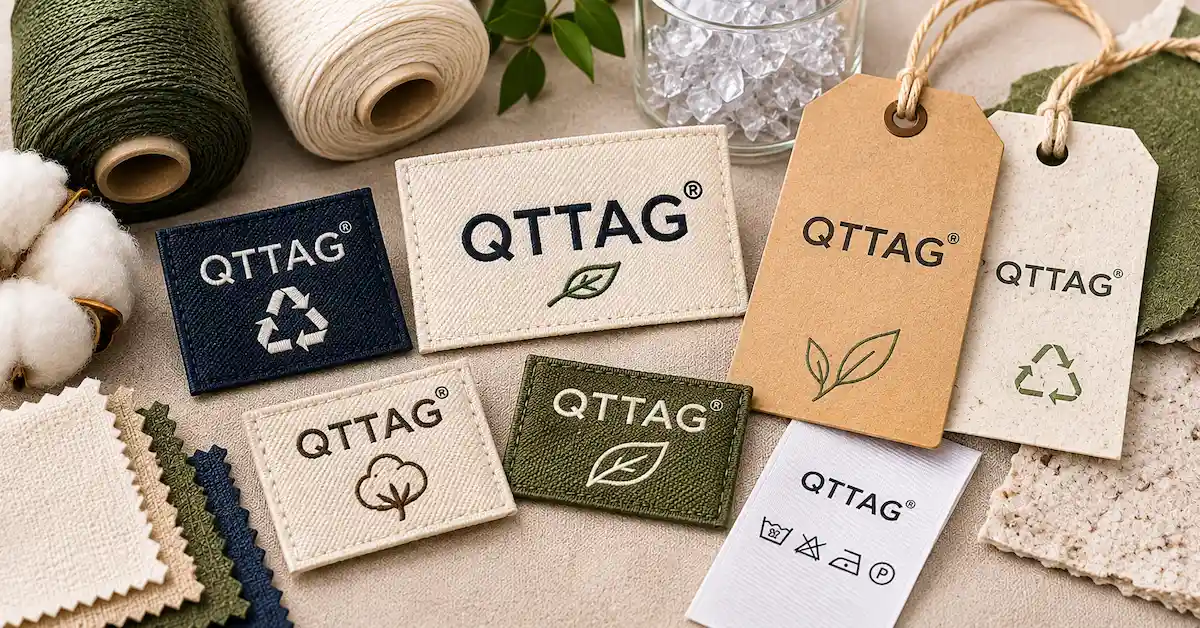
The best neck labels for an apparel brand depend on the garment fabric, desired appearance, wearing comfort, artwork, attachment method and intended care conditions. Woven labels offer a distinctive textile finish, printed labels can reproduce suitable logos and information, and tagless heat transfer labels provide an alternative to conventional sewn branding.
There isn't one construction that works best for every clothing collection.
For private-label buyers, the goal is to choose a label that looks right on the garment, can be reproduced consistently and meets the practical requirements of the intended market.
1. What Are Neck Labels Used For?
Neck labels are branding or identification components positioned around the inside neckline of clothing.
They commonly display a brand name, logo, garment size or other selected product information.
The construction varies.
A premium jacket might have a woven wordmark sewn onto the inner neck facing. A basic cotton T-shirt may use a small folded textile label inserted into the neckline seam. An activewear brand might prefer a printed heat transfer instead of a conventional sewn brand label.
These choices influence both how the garment looks and how it feels.
Neck labels also need to work alongside other identification and information labels.
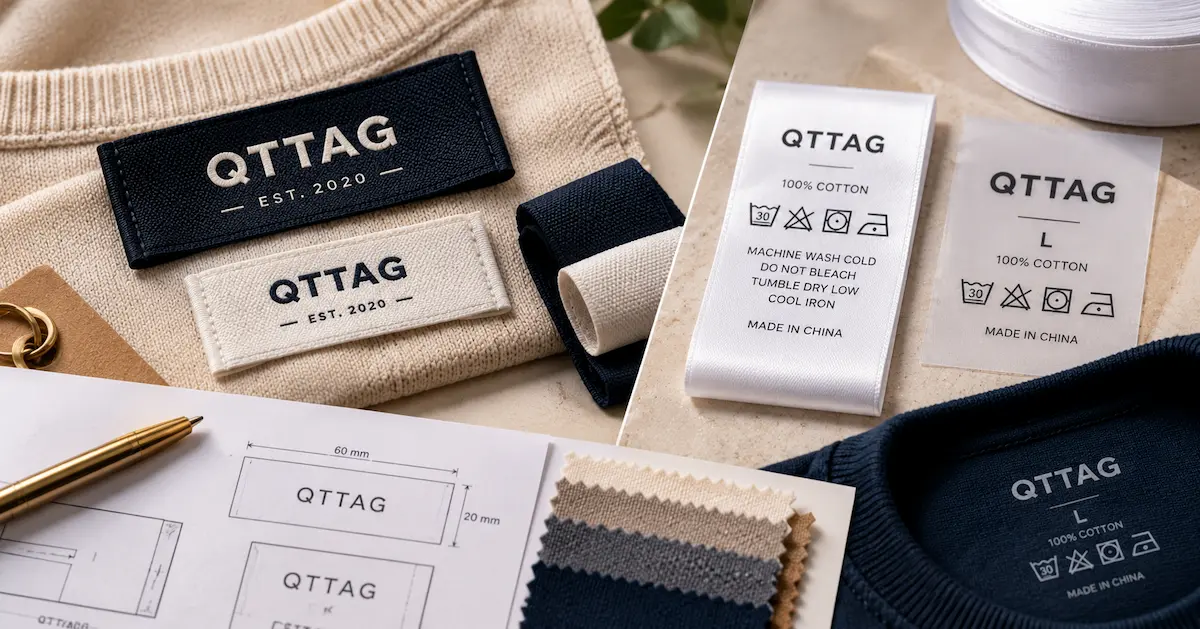
For example, a brand might use a woven neck label for its logo, a separate size label and a printed care label inside the side seam.
That arrangement may be suitable for certain products, but the required information and placement must still follow the rules of the intended market.
A brand label and a legally required care or origin disclosure are not necessarily the same thing.
2. Woven, Printed or Tagless: Which Neck Label Should You Choose?
The first purchasing decision is usually the manufacturing method.
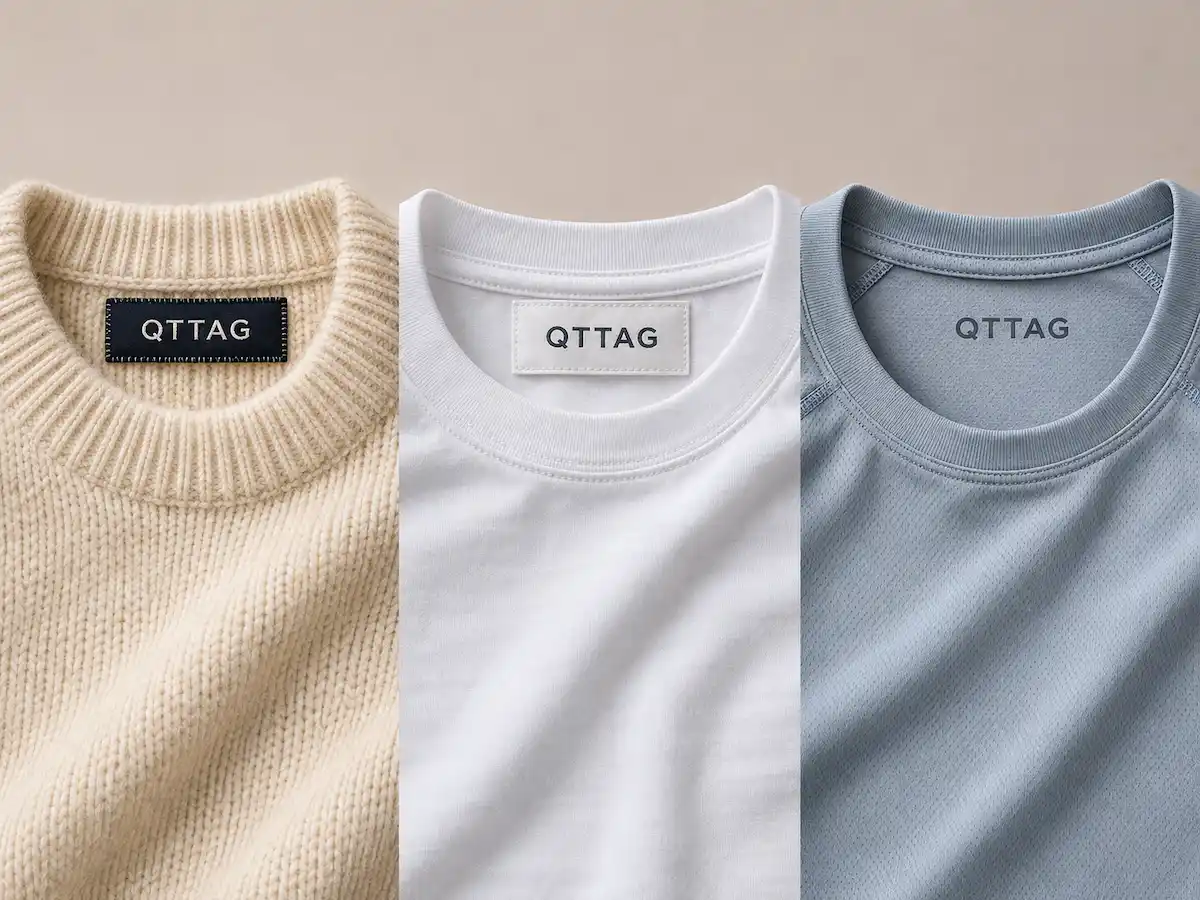
The three options below can produce very different results from the same logo.
| Neck Label Type | Main Characteristic | Suitable Consideration |
|---|---|---|
| Woven neck label | Artwork formed using interlaced yarns | Textile appearance, brand identity |
| Printed fabric neck label | Artwork printed onto a textile substrate | Readability, material choice, layout |
| Tagless heat transfer label | Artwork applied to compatible garment fabric | Low-profile branding, garment compatibility |
Woven Neck Labels
Woven labels are commonly used when a brand wants its identity to appear as part of a textile construction.
The artwork is formed through yarns rather than applied as ink to a fabric surface.
This can produce a distinctive appearance that suits knitwear, jackets, casualwear and many other garments.
The result depends on the weave construction, yarns, dimensions and logo detail.
A small woven label with a bold wordmark may be relatively straightforward to develop. A design containing very fine lettering or complex symbols may require a technical review.
Don't approve a woven neck label using an enlarged digital preview alone.
Look at the physical sample at its actual finished size.
Printed Fabric Neck Labels
Printed labels reproduce artwork on a compatible textile material.
They may be considered for brand names, garment identification and suitable information layouts.
The substrate influences the finished appearance.
Satin-style textile labels, polyester-based materials and certain cotton constructions have different surfaces and handling characteristics.
A printed label can be visually clear while still feeling inappropriate for the intended garment.
The buyer should evaluate both printing quality and material comfort.
Tagless Heat Transfer Labels
A tagless neck label typically places the logo or information directly onto a compatible garment fabric using a heat transfer process.
This avoids the additional fabric layers of a conventional sewn neck label at that location.
It may be a useful option for certain T-shirts, sportswear and close-fitting garments.
However, tagless does not automatically mean softer or more durable.
Transfer thickness, coverage, adhesion and fabric compatibility still matter.
A small printed neck logo on cotton cannot be assumed to perform identically on a polyester-elastane training shirt.
The finished transfer should be evaluated on the intended fabric.
3. How to Choose Neck Label Materials
Material selection affects appearance, flexibility, texture and manufacturing performance.
The best place to begin is the garment.
A label used on a heavyweight jacket may not need the same feel or construction as one used on a lightweight T-shirt.
Damask Woven Labels
Damask is often considered for relatively refined woven artwork.
Depending on the yarn and weaving specification, it may reproduce small lettering more clearly than certain other woven constructions.
That doesn't mean every detailed logo will work at any size.
The manufacturer should review the proposed artwork and prepare a representative sample.
Satin-Style Labels
Satin-style labels may provide a smoother-looking surface.
Their actual softness and flexibility depend on the construction, material and finishing.
They should be evaluated after cutting, folding and sewing.
Cotton-Based Labels
Cotton-based textile labels may suit selected garments and brand presentations.
However, cotton composition alone doesn't guarantee comfort or a particular laundering performance.
Printed and woven cotton constructions can have different characteristics.
Heat Transfer Materials
Tagless transfers are produced using different material and bonding systems.
The transfer supplier needs to know the garment fabric and intended application conditions before recommending a construction.
For stretch garments, the transfer's behavior during movement may be particularly important.
For cotton garments, surface finish and intended washing conditions still need consideration.
Material Selection at a Glance
| Garment | Primary Consideration | Possible Label Approach |
|---|---|---|
| Lightweight T-shirt | Low bulk and comfort | Compact woven, printed or tagless |
| Knitwear | Flexibility and attachment | Suitable woven or printed label |
| Premium jacket | Brand presentation | Woven label on suitable facing |
| Sportswear | Movement and fabric compatibility | Suitable tagless transfer or low-profile label |
| Underwear | Contact comfort | Appropriate printed or tagless construction |
| Uniform | Consistency and identification | Woven or printed label |
| Children's clothing | Comfort and product-specific requirements | Tested suitable construction |
These are starting points rather than fixed material rules. Final selection depends on the actual product.
4. Neck Label Fold Types: Small Differences That Matter
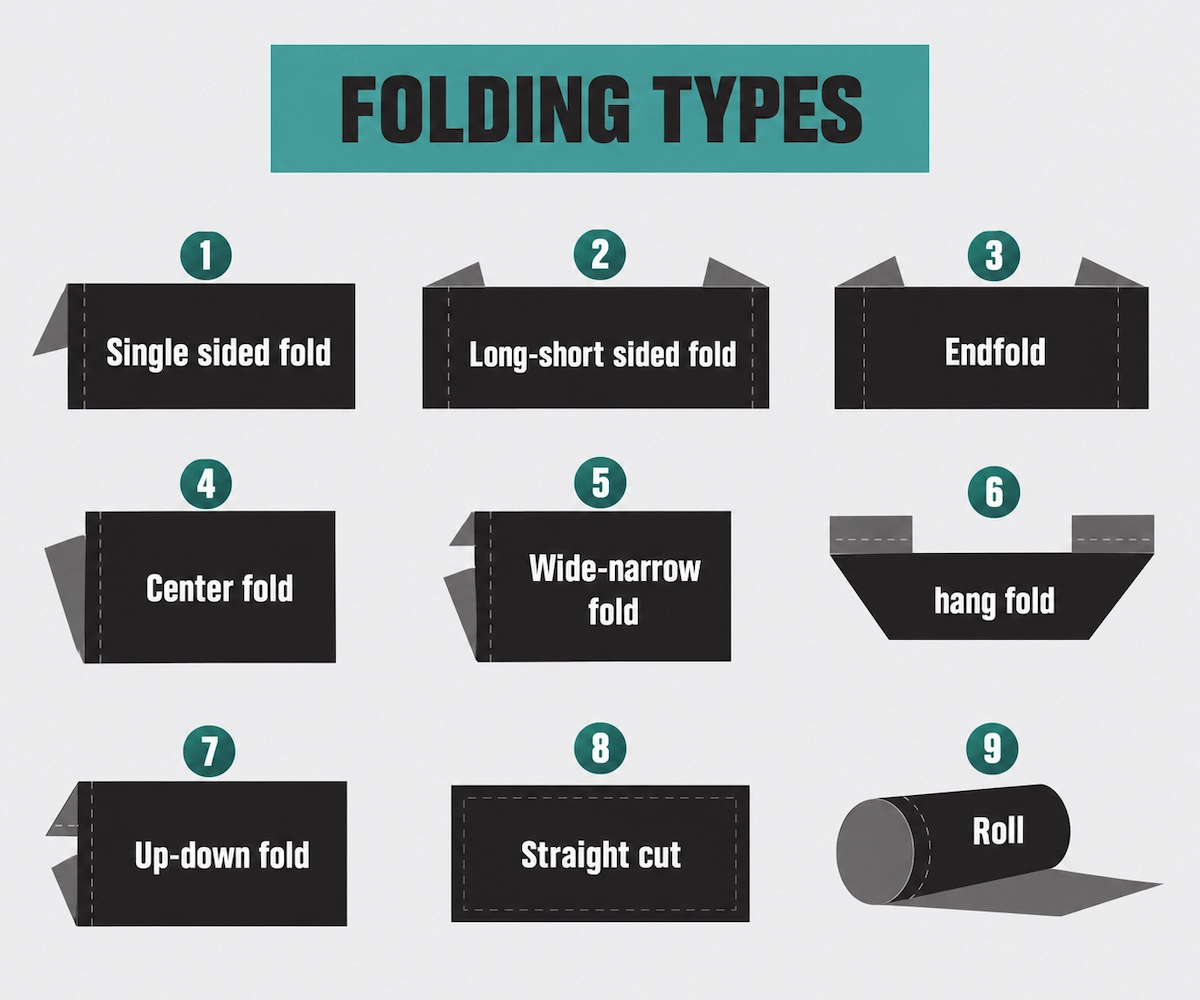
The fold determines the final shape of a sewn label and how it attaches to clothing.
It also affects how much of the original artwork remains visible.
Center Fold
A center-fold label is folded through the middle.
The two ends can be inserted into a suitable seam.
This construction may work for neckline applications where the label hangs or folds from the seam.
The artwork must be arranged around the fold correctly.
If one side carries the logo and the other carries information, the buyer needs to approve both sides.
End Fold
An end-fold label has sections folded behind the visible area.
Those folded ends can provide attachment points for sewing.
This may suit a brand label positioned flat against a suitable inner garment panel.
The finished dimensions are not necessarily the same as the full woven strip dimensions before folding.
Straight Cut
A straight-cut label has no conventional center or end fold.
It may be sewn onto a garment using an appropriate attachment method.
Its cut edges need to be suitable for the label material and intended application.
Other Constructions
Mitre folds, loop folds and other options may be available depending on the manufacturer.
They can create different appearances or attachment arrangements.
A clothing brand shouldn't choose an unfamiliar fold merely because it looks attractive in a supplier catalog.
The actual sewing method should guide the decision.
| Fold Type | Main Feature | What Buyers Should Check |
|---|---|---|
| Center fold | Fold through the middle | Artwork orientation and seam insertion |
| End fold | Ends folded backward | Visible size and sewing allowance |
| Straight cut | Unfolded construction | Edge finishing and attachment |
| Loop fold | Looped textile form | Bulk, shape and sewing position |
| Mitre fold | Angled folded ends | Symmetry and garment compatibility |
Always confirm whether the quoted dimensions refer to the flat material or the finished folded label.
That single clarification can prevent a label from arriving in the wrong size.
5. What Size Should a Neck Label Be?
There's no universal neck label dimension suitable for every garment.
A 50 mm-wide label may look balanced on one jacket and oversized on a small children's T-shirt.
The right size depends on the garment, logo proportions, available space and label construction.
Start With the Artwork
Check the smallest letters in the logo.
A design containing a complex symbol may need more space than a simple wordmark.
Increasing the size can sometimes improve reproduction.
But a larger label can introduce unnecessary material or change the garment's appearance.
Measure the Intended Position
Look at the actual neckline construction.
Is the label being inserted into a seam?
Will it be sewn flat onto a facing?
Does the garment have a collar stand, yoke or another panel that affects the attachment?
The visible label dimensions should be compatible with that construction.
Account for Folding
For a center-fold or end-fold label, confirm how folding changes the finished dimensions.
The supplier should understand the intended visible size and any required additional material.
Test the Proportions
A paper mockup or representative fabric sample can help identify size problems early.
Attach the sample to the garment and look at it in the way a customer would.
The label should feel like part of the design rather than an unrelated accessory.
6. Neck Label Placement and Comfort
A label can be correctly manufactured and still cause problems when sewn into clothing.
Placement affects how it looks and whether it contacts the wearer.
Neckline Position
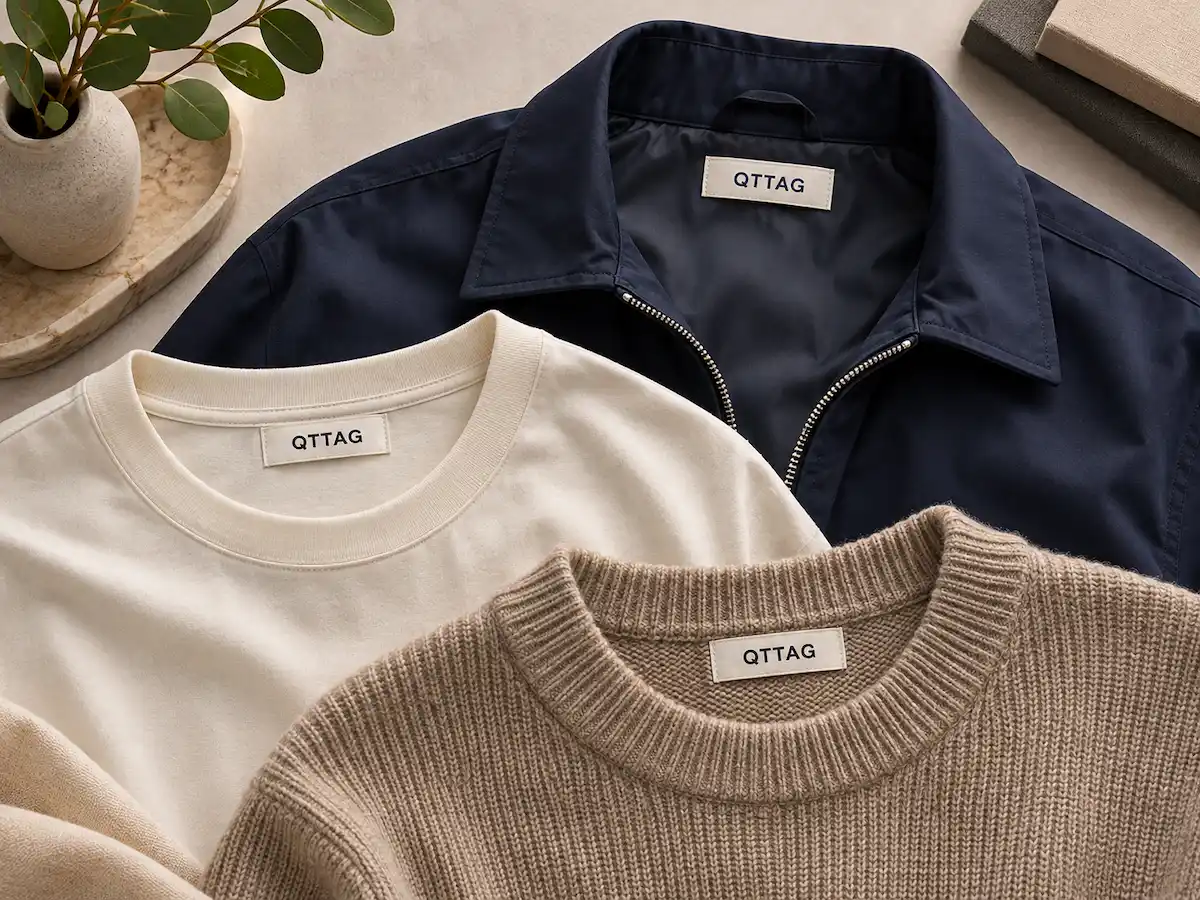
Many clothing brands place their main brand label near the center back neckline.
The exact position depends on the garment design and relevant labeling requirements.
A woven label might be attached to a facing or inserted into a seam.
A transfer label needs a suitable fabric area for application.
Avoid Unnecessary Bulk
Multiple layers of label material and stitching can create a noticeable area inside a lightweight garment.
For a close-fitting shirt, the buyer should review the complete label and attachment, not just the loose material.
Edge Finishing
Cut edges, folds and stitching can influence comfort.
A label described as soft before cutting may feel different after finishing.
Evaluate the actual sewn construction.
Garment Movement
Knitwear and activewear may stretch during normal wear.
The label and its attachment should suit that movement without unacceptable distortion.
The correct construction for a stable jacket lining may not suit a stretch neckline.
A Practical Approval Method
Sew or apply the proposed label to a representative garment.
Check appearance, feel and placement.
If comfort is a critical requirement, conduct an appropriate wear evaluation using the finished construction.
A supplier's material photograph cannot replace this step.
7. Neck Labels and Clothing Label Compliance
Branding choices and legal labeling obligations need to be considered separately.
A clothing brand can choose a beautifully woven logo label without necessarily satisfying every labeling requirement for the garment.
Country-of-Origin Information
In the United States, the Federal Trade Commission requires covered garments with a neck to display country-of-origin information at the inside center of the neck or an allowed nearby position.
Fiber-content and responsible-business information may be displayed on other appropriate labels, subject to the applicable rules.
The FTC explains these requirements in Threading Your Way Through the Labeling Requirements Under the Textile and Wool Acts.
That makes neckline layout a compliance consideration, not just a branding decision.
Care Instructions
Under the U.S. Care Labeling Rule, covered apparel must carry care information in a form that remains legible during the useful life of the product.
A removable retail hang tag alone generally isn't a substitute for the required permanent care information.
The care label does not necessarily have to be the main brand neck label, but the complete labeling arrangement must comply with applicable requirements.
Laundry Symbols
ISO 3758:2023 establishes a system of textile care symbols addressing relevant washing, bleaching, drying, ironing and professional textile-care processes.
However, applicable symbols and care-label rules can vary by market.
The intended destination should be checked before the final artwork is approved.
What About Tagless Labels?
A tagless neck print may provide the main brand logo or selected garment information.
It should not automatically be treated as a replacement for all legally required labels.
Where required information is printed directly onto a garment, its content, placement, permanence and legibility need review against the applicable rules.
Buyers should confirm their intended markets before changing the labeling arrangement.
8. How to Coordinate Neck Labels, Size Labels and Care Labels
A clothing brand may use several identification components on one garment.
Each serves a purpose.
The main neck label usually emphasizes the brand.
A size label helps identify the garment variation.
A care label provides relevant garment information.
Some garments also use hem labels or exterior branding details.
One Label or Several?
Combining information can reduce the number of separate components.
But a crowded neckline label may become difficult to read or uncomfortable.
A separate printed care label may provide more room for detailed information.
Multi-Language Clothing Collections
A brand exporting to several countries may need different information layouts or languages depending on destination-market rules.
The main brand logo can remain consistent while the care information varies.
These different artwork versions should be managed carefully.
Consistent Branding
Neck labels, hem labels, hang tags and packaging can share the same approved logo and brand typography.
However, different production technologies may reproduce colors and fine details differently.
A visual system should be coordinated without assuming every material can produce an identical result.
9. What Does a Good Neck Label Sample Look Like?
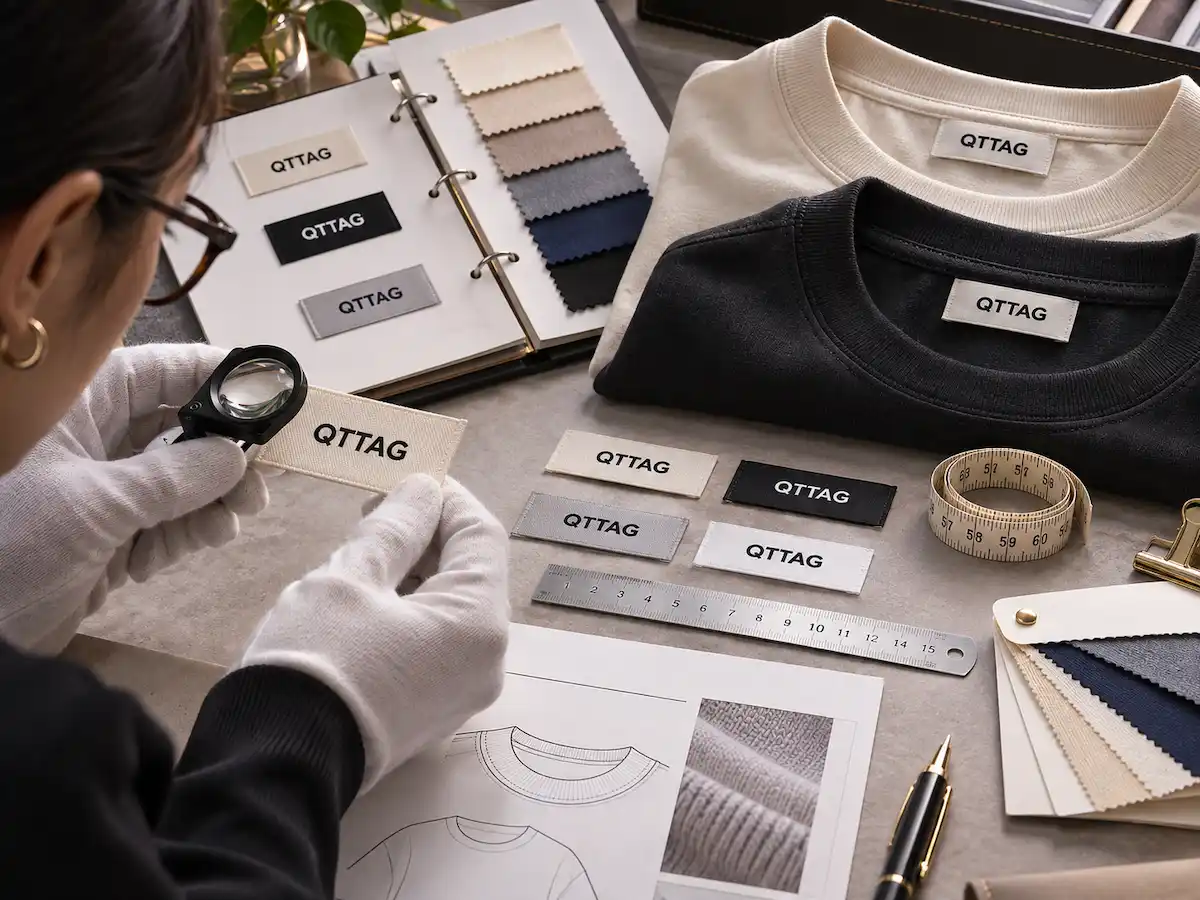
A useful sample is one that represents the intended final product.
It should demonstrate the actual label material, artwork, dimensions and finishing.
If the garment requires a sewn neck label, review the finished cut and folded sample.
If the brand wants a tagless transfer, inspect the design after application to representative fabric.
Sample Approval Checklist
| Inspection Item | What to Check |
|---|---|
| Logo artwork | Correct proportions and legibility |
| Material | Approved texture and construction |
| Colors | Agreed physical appearance |
| Finished size | Correct width and height |
| Fold | Correct orientation and finishing |
| Edges | Acceptable cutting and feel |
| Placement | Suitable garment position |
| Attachment | Correct sewing or transfer application |
| Comfort | Appropriate for intended contact |
| Washing | Relevant performance requirements |
| Versions | Correct size and product information |
Review the Smallest Details
Fine lettering can be lost in woven construction or reproduced poorly with an unsuitable printing process.
Check the sample at its intended size.
Review the Finished Garment
A loose label on a sample card cannot demonstrate every aspect of the finished application.
Sewing and garment construction may change how the label sits.
Retain an Approved Reference
Once the sample is accepted, keep the approved physical label and corresponding artwork.
That reference can help maintain consistency during production and repeat orders.
10. Neck Label Cost, MOQ and Production Lead Time
The price of a custom neck label depends on more than its physical size.
For woven labels, yarn selection, weave, colors and finishing may influence the quotation.
For printed labels, the substrate, printing and information layout matter.
For heat transfer labels, material construction, artwork dimensions, fabric compatibility and application arrangements can affect the overall purchasing cost.
What Affects MOQ?
MOQ means Minimum Order Quantity.
It may be calculated per design, colorway, material or manufacturing run.
A brand ordering one logo in several color combinations should confirm whether those versions count separately.
Similarly, size information may require multiple artwork versions if it is incorporated into the main neck label.
There is no universal MOQ across every manufacturer.
Sampling and Development Charges
Some suppliers include basic artwork checks or digital proofs in their quotations.
Other services may be charged separately.
Physical samples can introduce additional preparation or approval steps.
Request a quotation based on the intended finished construction rather than a general product description.
Lead Time
A new design may require artwork preparation, material confirmation, sample development and final approval before bulk production begins.
The quoted production time may start only after those steps are completed.
For an urgent clothing collection, confirm the expected sample-approval date, manufacturing completion and dispatch arrangements.
A supplier's production turnaround should not automatically be interpreted as the date labels will arrive at the garment factory.
11. What Should You Include in a Neck Label RFQ?
A well-prepared request for quotation makes it easier for a supplier to recommend a suitable construction.
| RFQ Information | What Buyers Should Provide |
|---|---|
| Garment type | T-shirt, jacket, knitwear, uniform or other |
| Garment fabric | Composition and relevant finish |
| Logo | Approved artwork |
| Label type | Woven, printed or tagless |
| Dimensions | Finished width and height |
| Material | Preferred yarn, textile or transfer construction |
| Colors | Approved references |
| Fold | Center fold, end fold, straight cut or other |
| Attachment | Sewing or heat application |
| Placement | Intended neckline position |
| Variations | Different sizes, colors or artwork |
| Quantity | Total and amount per version |
| Sampling | Physical sample requirements |
| Performance | Relevant comfort and washing conditions |
| Destination | Market and delivery location |
| Schedule | Required arrival date |
If you haven't selected a material or fold type, provide the garment information and logo first.
The supplier can then discuss available options.
An accurate quotation should describe the finished product, including relevant cutting, folding or application requirements.
12. Frequently Asked Questions About Neck Labels
What are the best neck labels for clothing brands?
The best option depends on the garment, fabric, logo, desired appearance and comfort requirements. Woven, printed and tagless labels can all be suitable in different applications.
Are woven neck labels better than printed neck labels?
Not automatically. Woven labels provide a particular textile appearance, while printed labels can support different artwork and information layouts. The right choice depends on the finished garment.
What are tagless neck labels?
Tagless neck labels are typically branding or information designs applied directly to suitable garment fabric without a conventional sewn brand tag at that location.
Are tagless neck labels more comfortable?
They may avoid some bulk associated with a separate sewn label, but actual comfort depends on transfer material, artwork coverage and garment compatibility.
Which neck label is best for T-shirts?
A compact woven, printed or suitable tagless label may work. Lightweight fabrics and wearing comfort should influence the decision.
What fold type is commonly used for neck labels?
Center folds, end folds and straight-cut constructions are common options. Selection depends on garment placement and sewing requirements.
How do I choose the correct neck label size?
Review logo readability, garment dimensions, finished label proportions, fold requirements and attachment. Approve the sample on a representative garment.
Can a neck label include garment size information?
Yes. Size information may be incorporated into the main label or provided through a separate size label. The arrangement should suit the garment and manufacturing process.
Can I use one neck label design across my whole collection?
Possibly. A common brand logo can be used across different garments, but materials, dimensions or attachment methods may need adjustment.
Are neck labels required by law?
Legal requirements concern particular product information and its placement, rather than requiring every brand to use a decorative neck logo. Requirements depend on the product and intended market.
Can a tagless logo replace a country-of-origin or care label?
Not automatically. The final labeling arrangement must satisfy applicable content, placement, permanence and legibility rules.
What is the MOQ for custom neck labels?
MOQ depends on the supplier, material, construction and artwork variations. Request a quotation using the actual label specification.
Can neck labels be customized for private-label clothing?
Yes. Customization can involve the brand logo, materials, dimensions, colors, fold type and garment application, subject to manufacturing feasibility.
Should I approve physical samples before bulk ordering?
Physical samples are strongly recommended for new constructions or significant changes. They help verify appearance, material feel, dimensions and garment compatibility.
13. Develop Custom Neck Labels With QTTAG
Choosing neck labels is part of garment development, not simply a final branding decision.
The label should reproduce the approved logo, suit the garment fabric and work with the intended construction.
For apparel brands, material selection, folding, comfort and sample approval are all important before bulk manufacturing begins.
QTTAG supports custom garment branding inquiries involving woven labels, printed fabric labels, heat transfer labels and related apparel identification products.
Specific materials, dimensions, finishing options, MOQ and production schedules should be confirmed for each project.
Ready to Create Custom Neck Labels for Your Clothing Brand?
Share your logo artwork, garment specifications, preferred label materials, neckline placement, dimensions, fold requirements and estimated order quantity with QTTAG.
Our team can review your requirements and discuss suitable customization and sampling options for your apparel collection.
Request a Quote
Author
Founder at QTTAG
Jason Qiao is the founder of QTTAG, focusing on garment branding and packaging solutions. With years of experience in the apparel industry, he shares practical insights on custom labels, hang tags and sustainable packaging to help global brands grow.
Written By
Jason Qiao